
Today’s Survey Dive at the Beach
Yesterday’s diving was unfortunately canceled just before we headed out because a tsunami advisory was issued. Thankfully, the advisory was lifted in the evening, and we were able to dive in Kushimoto safely today.
Today’s dive was a survey dive at the beach, which also served as a site check for my wife, who will be returning to guiding this summer.
Starting in July, we will have two guides available on many days. This means we will be able to run Discover Scuba Diving programs, training courses, and fun dives on the same day more often than before. Feel free to contact us if you are interested!
Now, back to the underwater world.
The effects of the recent heavy rain were still noticeable at the beach. Visibility was around 5–7 meters, and the water temperature was approximately 24°C.
The thing I was most concerned about during today’s survey was the condition of the corals.
As soon as I saw the entry area, I became a little worried.
A rocky section that had been there for years had turned into a smooth sandy area, and the sand on both sides had clearly been washed away by strong waves.
The entry has actually become easier, but it also showed just how powerful the waves were during the typhoon.
Would the corals be okay?
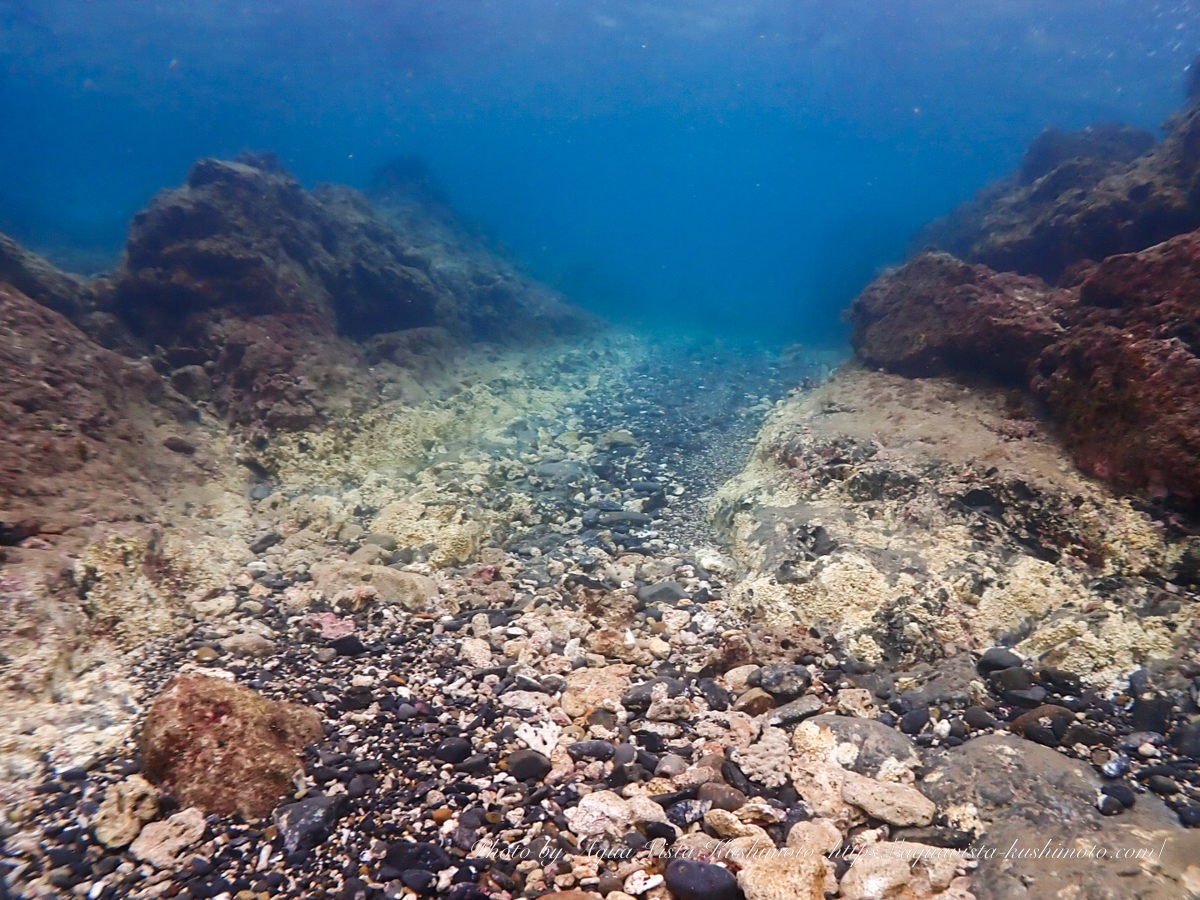
With that concern in mind, we swam toward the coral colony area.
Fortunately, most of the corals were still in good condition. However, many branching corals had broken tips, likely caused by the strong surge from the typhoon.
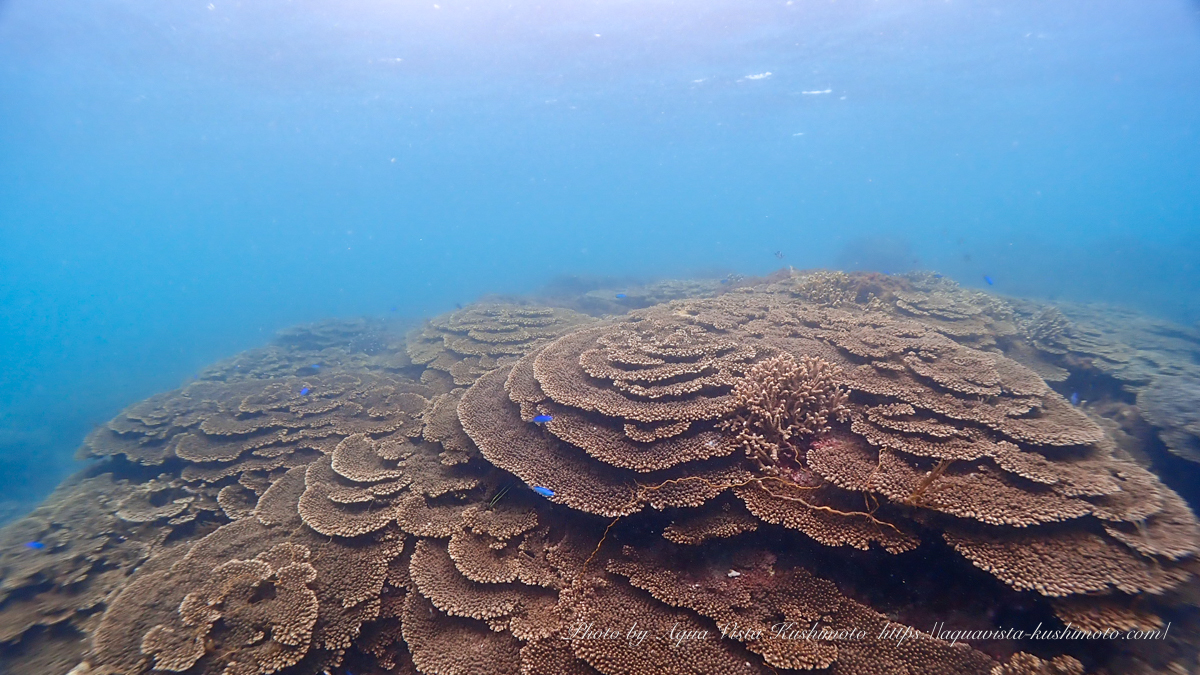
I had been expecting coral spawning to possibly occur this week, but the storm may have affected the timing.
We also found a few areas where table corals had been detached along with the rock beneath them.
Even so, one of the most amazing things about corals is their resilience. They can recover, grow again, spawn, and gradually expand their colonies over time.
On the way back, we observed several tough fish that had successfully survived the storm.
The first was Neon Damselfosh. One individual had visible injuries on its body, perhaps evidence of what it endured during the rough conditions.
Next was a fish that reminded us of the influence of the Kuroshio Current.
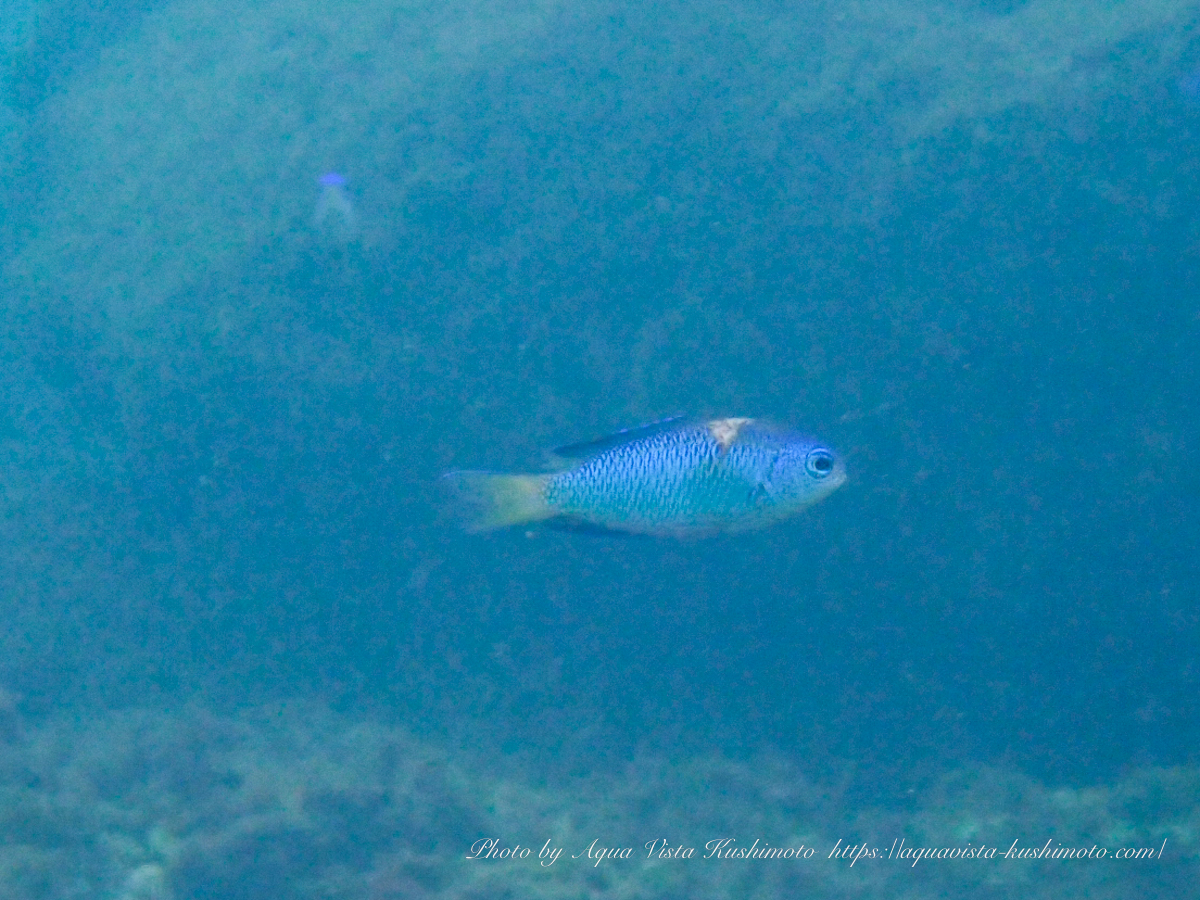
Until last year, we rarely saw individuals of this size, but this year we have been encountering juvenile Lesson's thicklip much more frequently.
It is probably a sign that winter water temperatures remained relatively warm. Maybe some of them will stay and grow into adults.
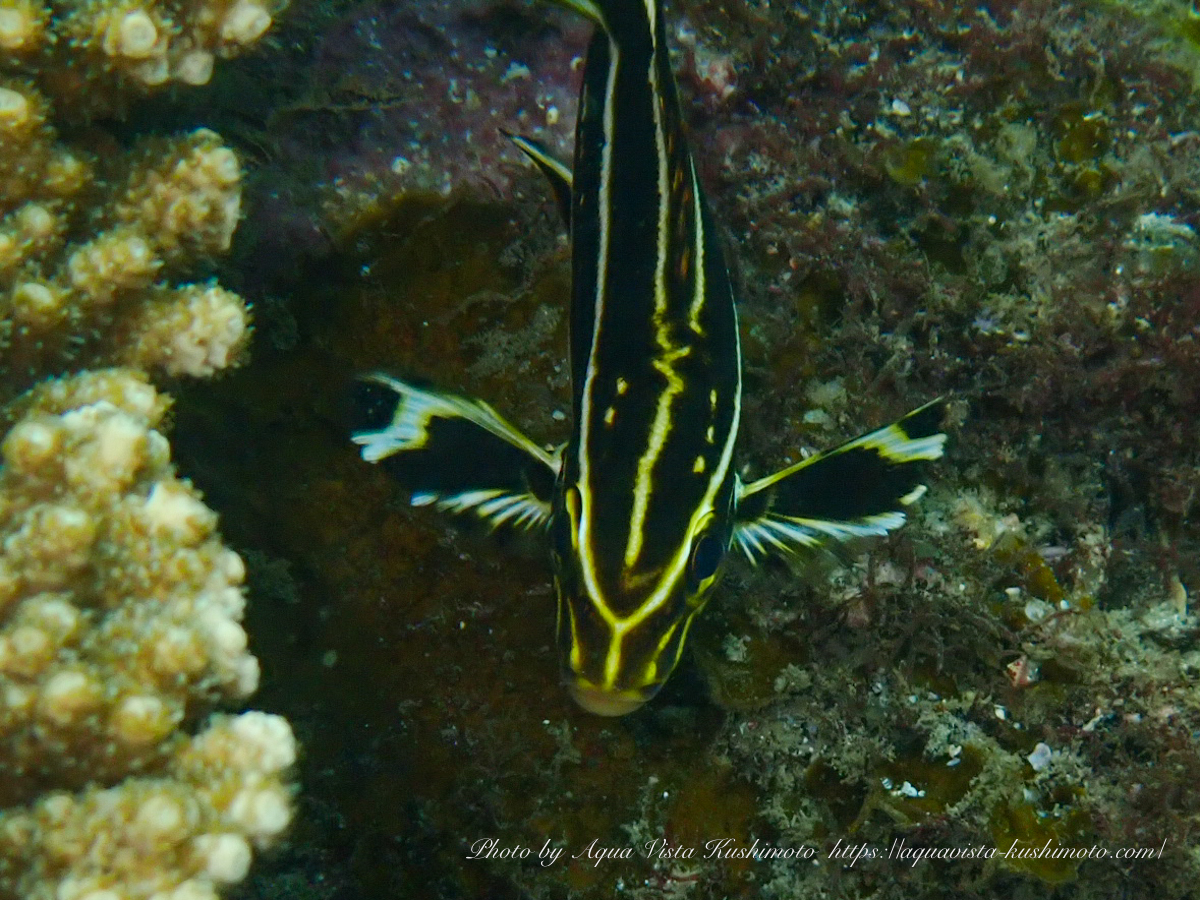
Just before exiting the water, we also found Barred-chin blenny They are often associated with tide pools, but they can be found in other habitats as well.
Watching them made me think about how these small fish had also managed to survive the storm. Their breeding season is approaching, so it may soon be time to start visiting the tide pools regularly again.
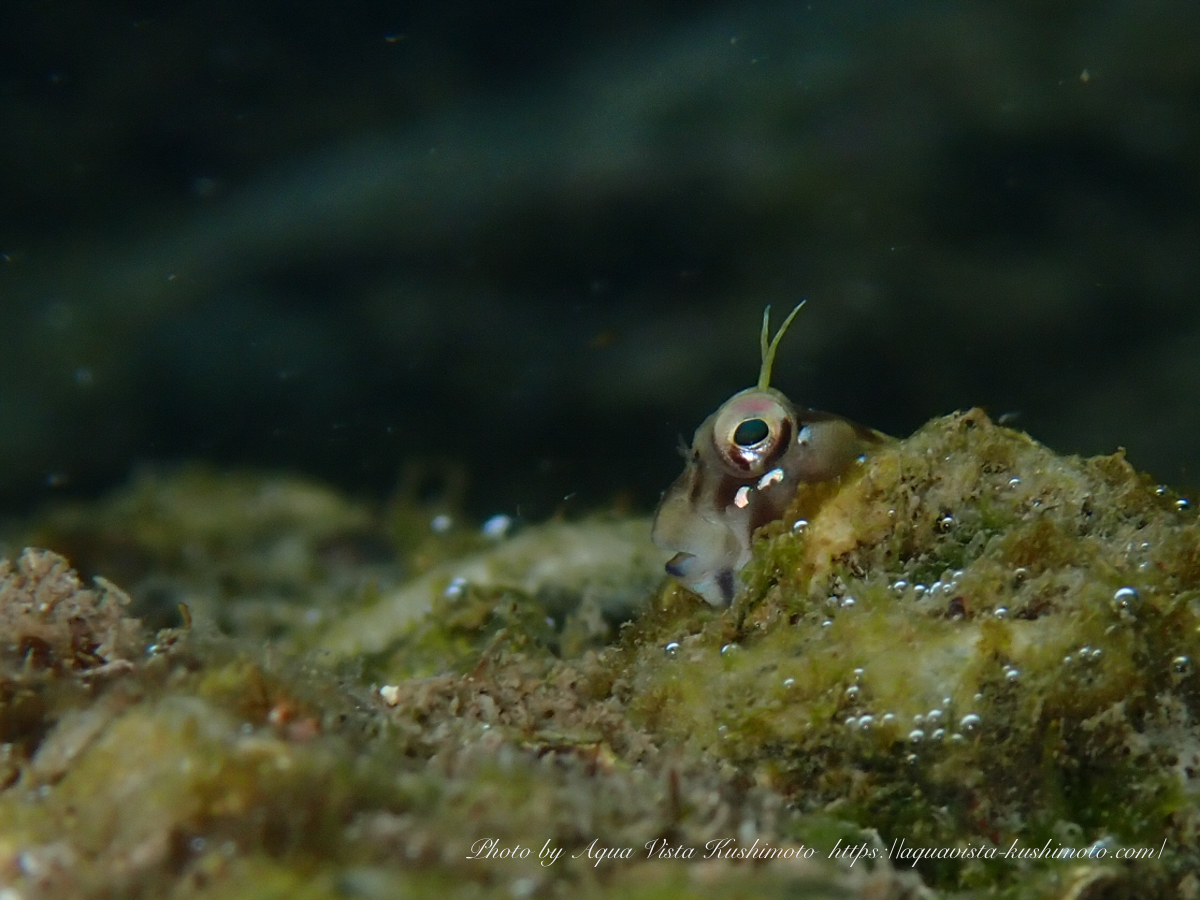
Overall, today was a day spent checking coral conditions, observing a variety of fish, and conducting training dives for our staff.
As for the coral spawning that many divers look forward to in Kushimoto, I am still not sure when it will happen this year.
I plan to conduct another coral spawning survey on the 11th.
Stay tuned for the results!
See you underwater.
Today’s Ocean Conditions (Kushimoto Beach)
Weather: Rain
Air Temperature: 18–21°C
Water Temperature: 23.4-24.0°C
Visibility: Approximately 5 -7m
Recommended Exposure Protection:
- 6.5 mm two-piece wetsuit
- 5 mm wetsuit
-
Announcements
◾️Event Information
• Tide Pool Barred-chin blenny Photo Tour confirmed!
• Coral Spawning Observation Night Diving Confirmed!◾️Media
• We are one of the guide shops responsible for posting seasonal ocean updates from Kushimoto on “海旬”.
• Instagram is regularly updated!
• Our YouTube channel is now available!
• A video of Japanese Giant Salamander was featured by diving_partner on their platform.